Given n non-negative integers representing the histogram’s bar height where the width of each bar is 1, find the area of largest rectangle in the histogram.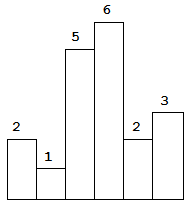
Above is a histogram where width of each bar is 1, given height = [2,1,5,6,2,3].
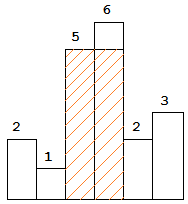
The largest rectangle is shown in the shaded area, which has area = 10 unit.
Example:
Input: [2,1,5,6,2,3]
Output: 10
首先,如果栈是空的,那么索引i入栈。那么第一个i=0就进去吧。注意栈内保存的是索引,不是高度。然后i++。
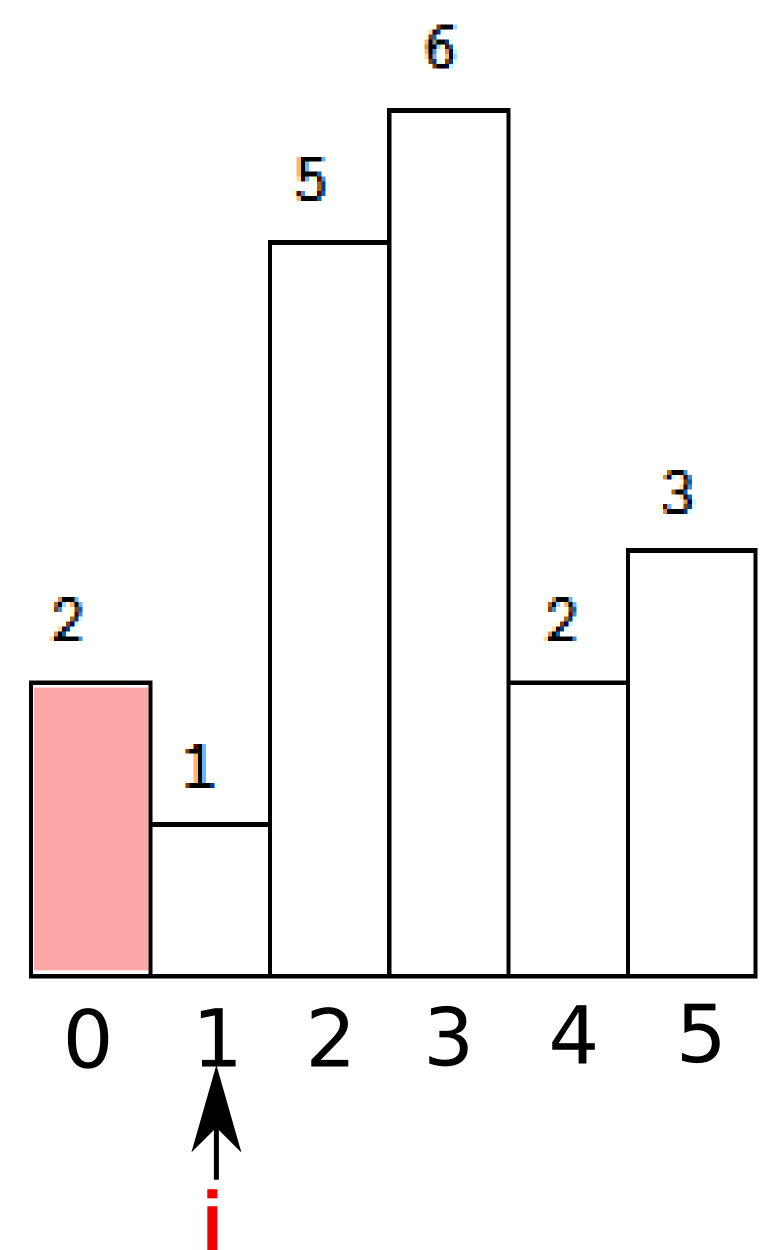
然后继续,当i=1的时候,发现h[i]小于了栈内的元素,于是出栈。(由此可以想到,哦,看来stack里面只存放height单调递增的索引)
这时候stack为空,所以面积的计算是h[t] * i。t是刚刚弹出的stack顶元素。也就是蓝色部分的面积。
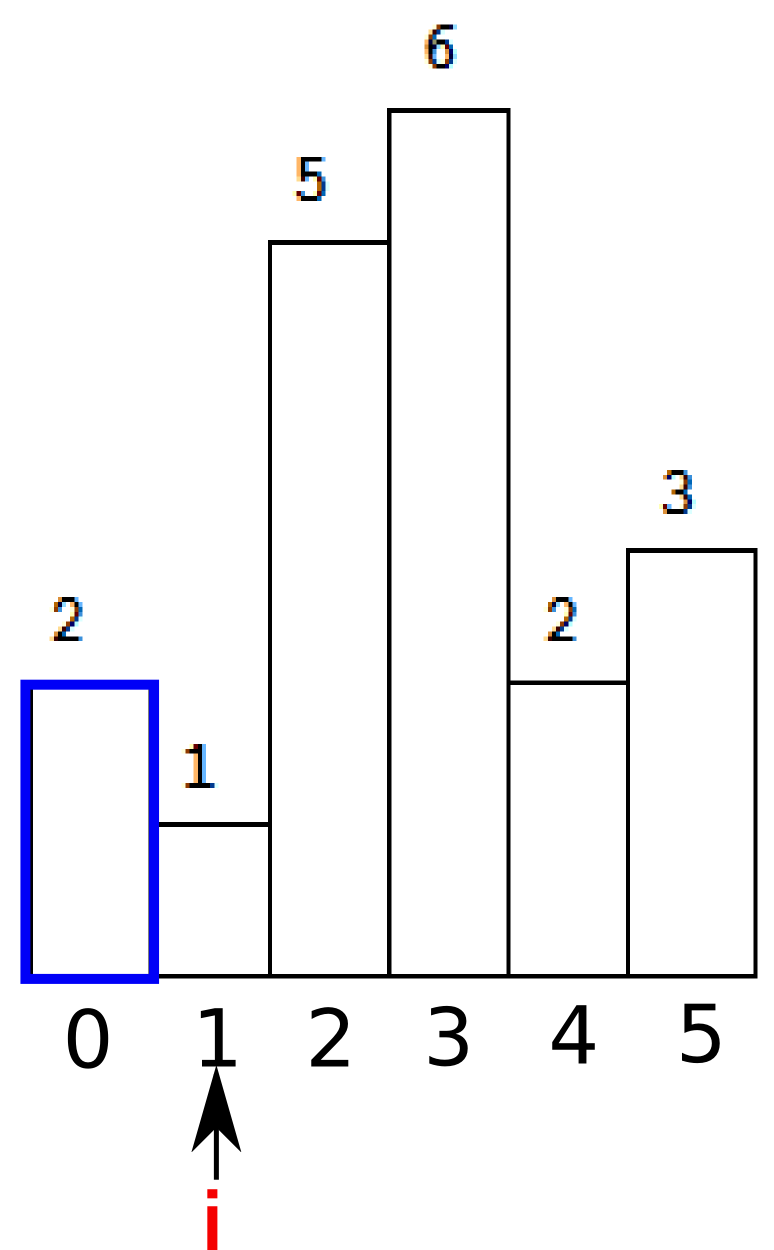
继续。这时候stack为空了,继续入栈。注意到只要是连续递增的序列,我们都要keep pushing,直到我们遇到了i=4,h[i]=2小于了栈顶的元素。
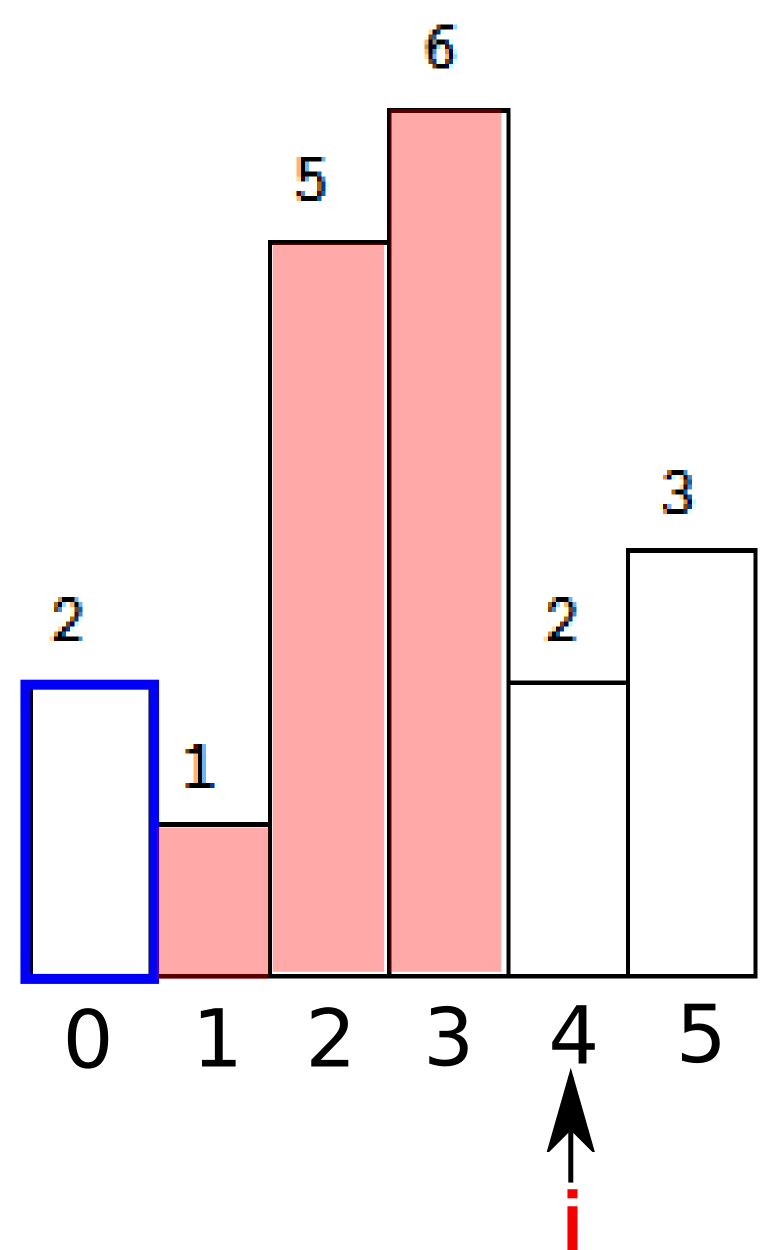
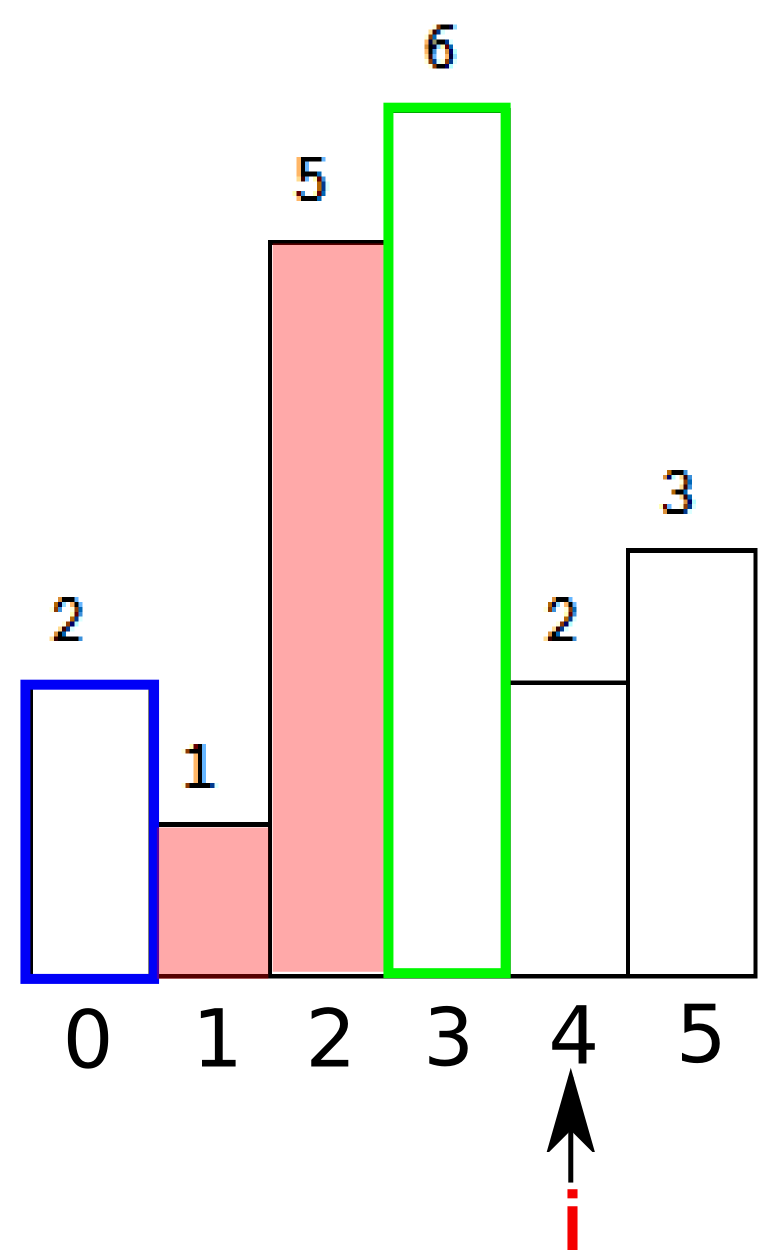
这时候开始计算矩形面积。首先弹出栈顶元素,t=3。即下图绿色部分。
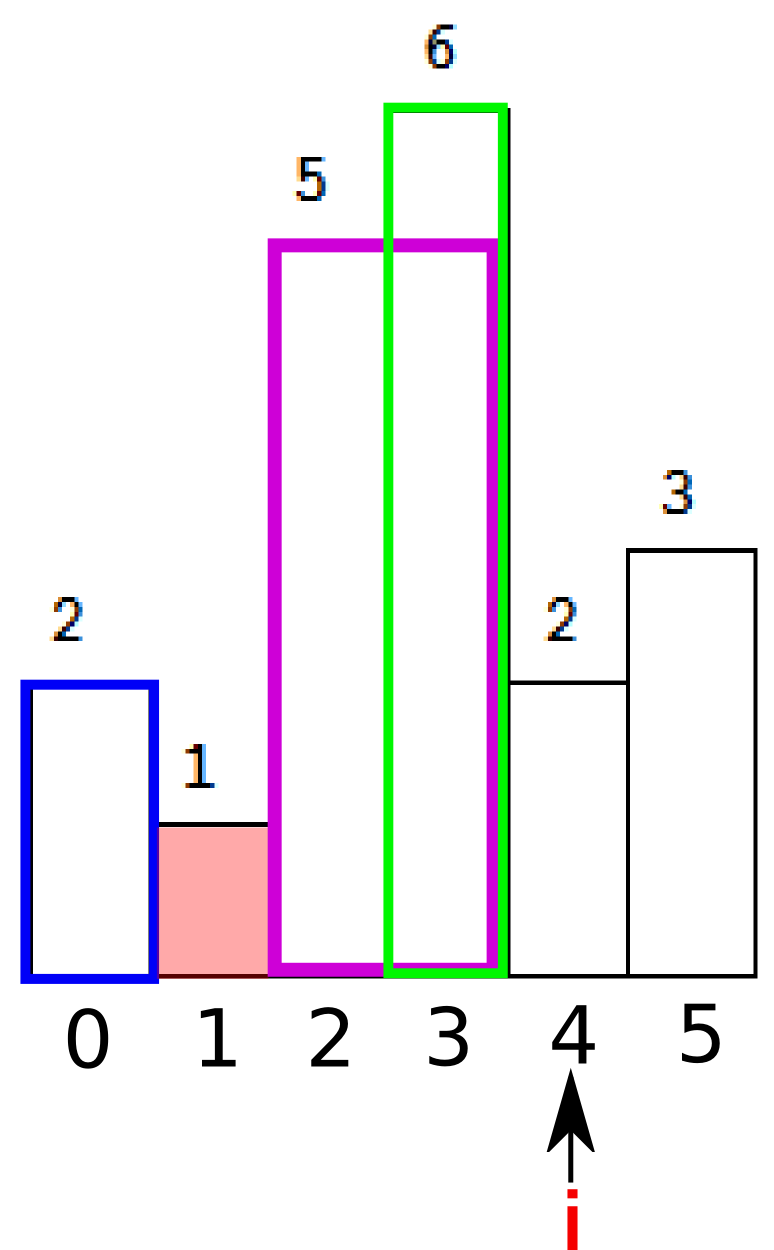
接下来注意到栈顶的(索引指向的)元素还是大于当前i指向的元素,于是出栈,并继续计算面积,紫色部分。
最后,栈顶的(索引指向的)元素小于了当前i指向的元素,循环继续,入栈并推动i前进。直到我们再次遇到下降的元素,也就是我们最后人为添加的dummy元素0.
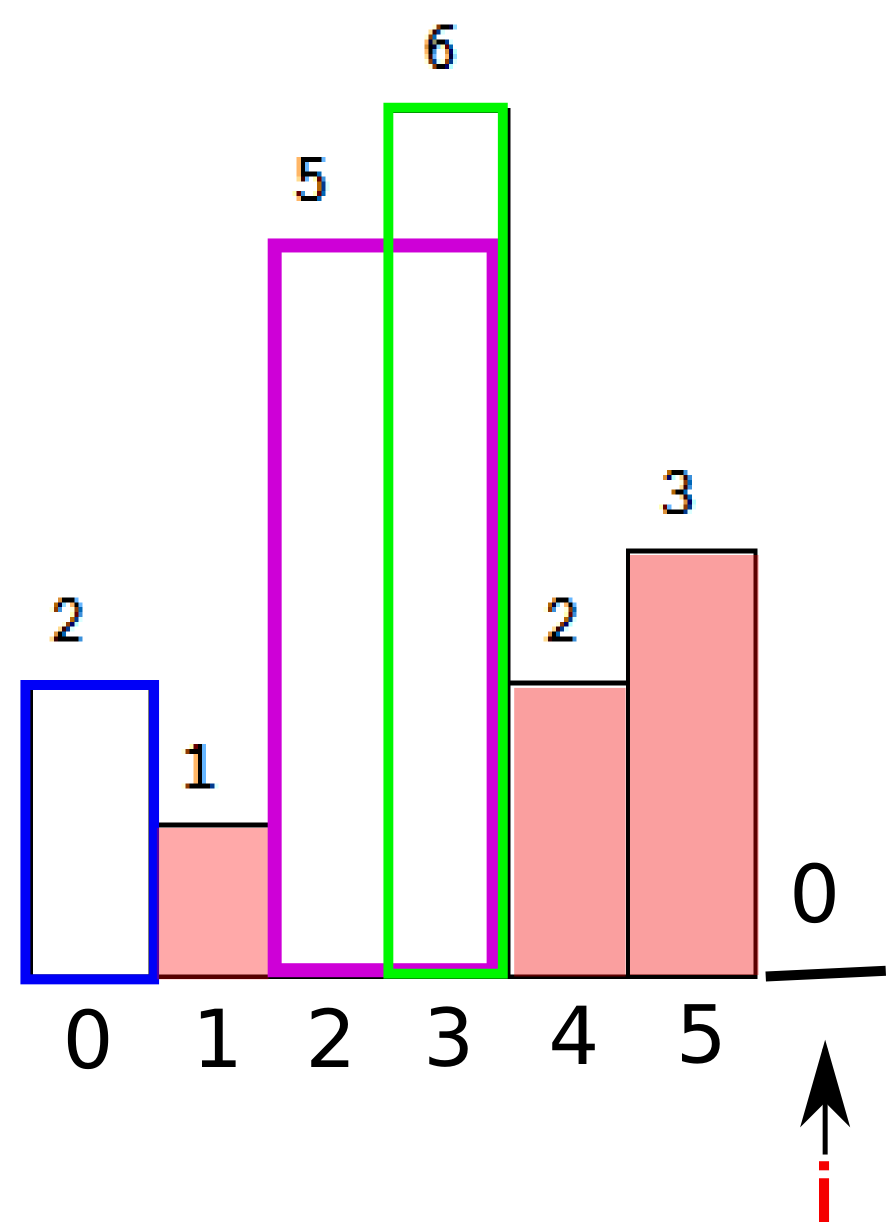
同理,我们计算栈内的面积。由于当前i是最小元素,所以所有的栈内元素都要被弹出并参与面积计算。
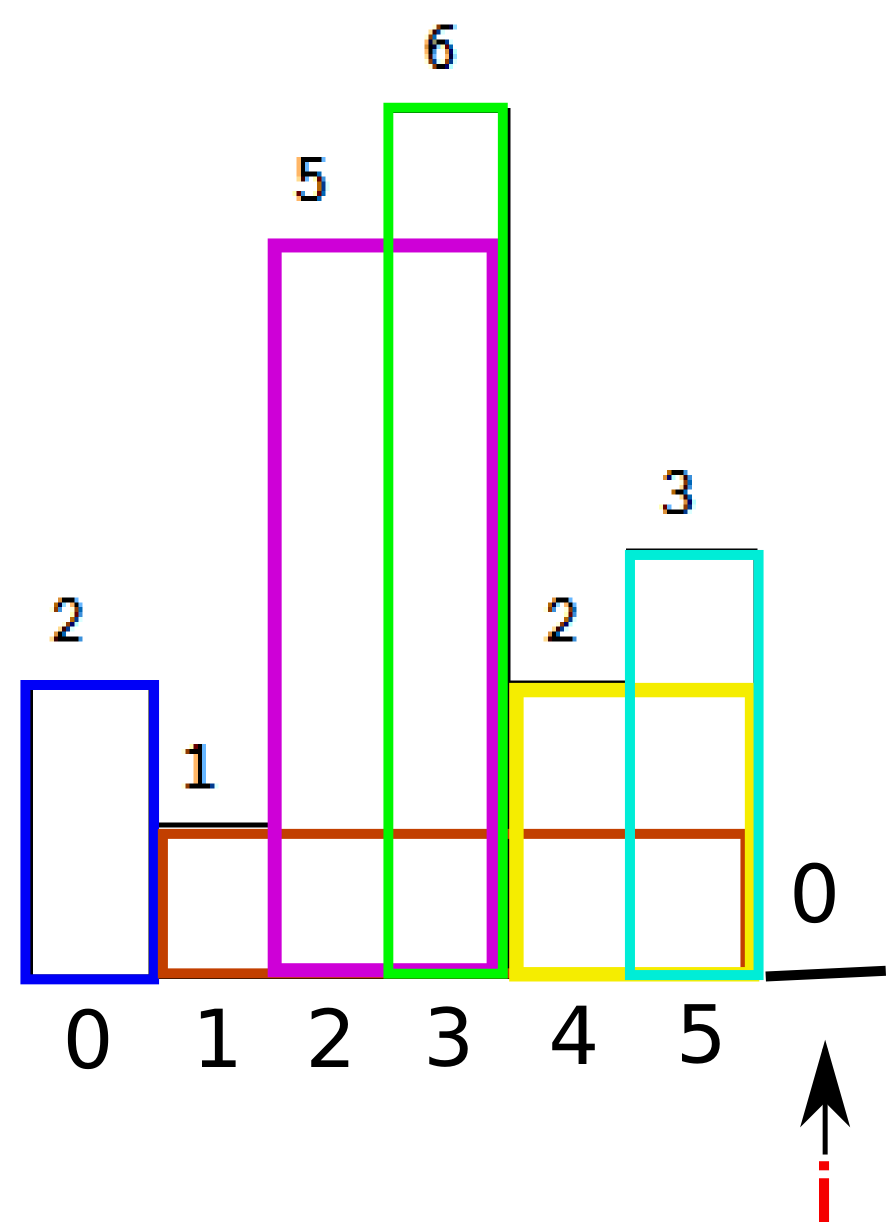
注意我们在计算面积的时候已经更新过了maxArea。
总结下,我们可以看到,stack中总是保持递增的元素的索引,然后当遇到较小的元素后,依次出栈并计算栈中bar能围成的面积,直到栈中元素小于当前元素。
这个弹栈的过程也是维持程序不变量的方法啊:栈内元素一定是要比当前i指向的元素小的。
1 | class Solution { |